



The concept of Grade (class) is a term often misunderstood and misused in the lithium-ion battery industry. Manufacturers usually add classification codes such as A Grade, B Grade, or C Grade on cell labels to indicate the quality and performance level of the cells. In retail sales, this classification information is often not shared with the end user; however, in bulk purchases, it can be clearly specified which grade of battery is preferred. Generally, A Grade cells represent the highest quality and price level, while B and C Grade cells are positioned as more cost-effective alternatives.
How Do Battery Manufacturers Determine the Grade of Cells?
Battery manufacturers subject the cells to charge/discharge cycles during the formation process to determine their capacity. Throughout the process, internal resistance, voltage, and other quality data are continuously recorded. The grade of the cells is generally determined based on Capacity (Ah).
- Cells that are very close to the nominal capacity and consistent are usually classified as A Grade
- Cells with lower capacity or inconsistencies in capacity distribution may be classified as B, C, or D Grade
Does Using B Grade Cells Make Batteries Inferior Compared to A Grade?
B Grade cells are usually those that fall outside the A Grade classification criteria but are still usable. For example, if a manufacturer plans to produce a 5000mAh cell, cells in the 4980–5020mAh range may be classified as A Grade, while cells in the 4940–4980mAh range may be classified as B Grade.
B Grade cells must pass internal resistance and voltage tests regardless of capacity. If this slight capacity difference is not critical for your application, using B Grade or C Grade cells is perfectly acceptable. Since B Grade cells have the same cycle life as A Grade cells, you will not experience any issues with longevity.
How Can We Determine the Grade of the Batteries We Purchase?
Most cell manufacturers do not explicitly label A/B/C Grade on the cells; the grade classification is maintained in internal quality systems and customer-specific sales documents.
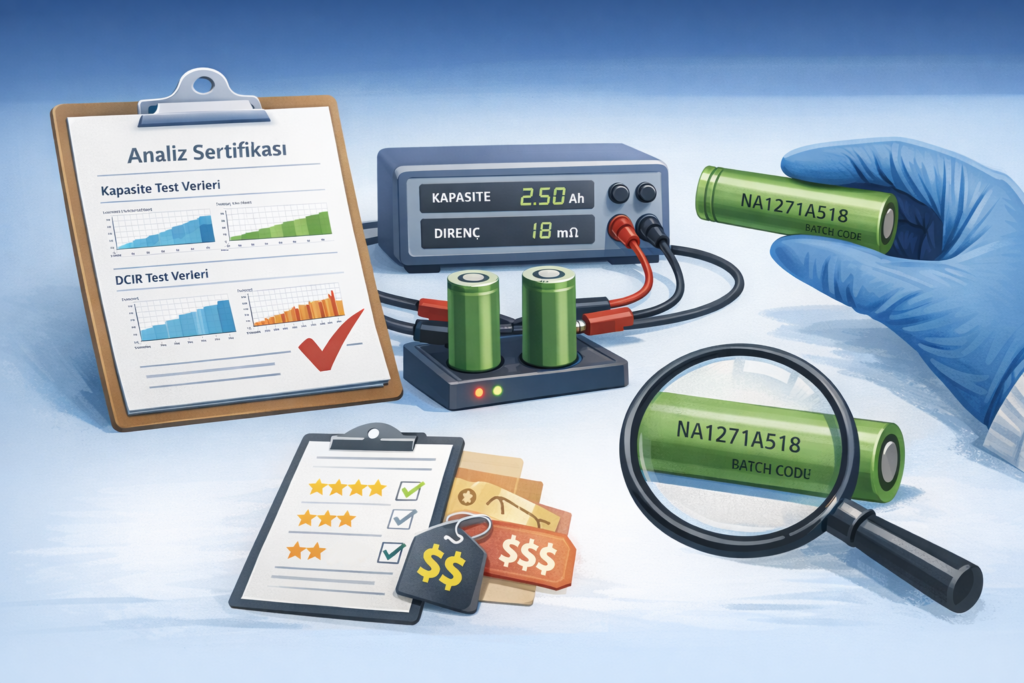
The most reliable way to determine the grade of purchased cells is to rely on manufacturer and test data rather than the labels on the cells. COA/CoC test reports can be requested from the manufacturer or authorized distributor to examine capacity and internal resistance distribution. Batch and traceability codes can be used to verify lot information. Sample cells can be tested for capacity and internal resistance to check consistency between cells. Finally, the claimed grade can be confirmed by analyzing price and supplier reliability.

Leave a Reply